DreamBox Learning Review: Is It Worth the Cost?
Quick Summary
DreamBox Math costs $12.95 or $19.95 a month to start. See 2026 plan prices, pros, cons, and whether this adaptive math app is worth it for parents.
Tags
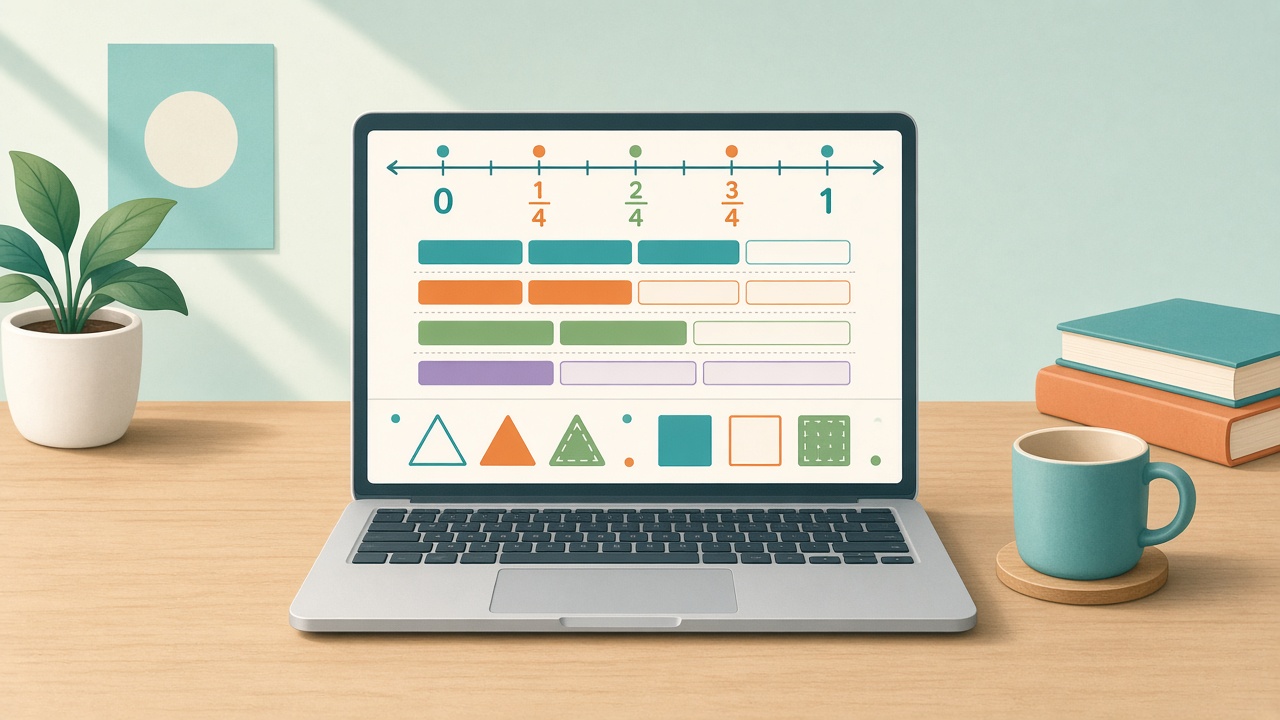
DreamBox Math is a paid adaptive math program for kindergarten through 8th grade. It does cost money. As of October 16, 2026, an individual plan starts at $12.95 for one month and a family plan starts at $19.95 for one month. DreamBox Learning is part of Discovery Education.
The short version for parents: DreamBox is worth the cost when you want a math-only program that changes the lesson while the child is working, and you can use a computer, Chromebook, or iPad. It is a weak fit if you need a phone or Android tablet, several subjects in one subscription, or a heavier game than a lesson with rewards.
How much does DreamBox cost in 2026?
DreamBox lists two home price sets on its pricing page. The lifetime options are 10-year, non-renewing subscriptions. DreamBox says a monthly family subscription renews automatically until you cancel, and that you can cancel at any time. Prices below are US, dreambox.com, Oct 2026.
| Plan | 1 month | 6 months | 12 months | Lifetime |
|---|---|---|---|---|
| Individual | $12.95 | $59.95 | $99.95 | $250 |
| Family | $19.95 | $99.95 | $149.95 | $325 |
DreamBox offers a 14-day free home trial (US, dreambox.com trial page, Oct 2026). Pick a plan before day 14 if you want to keep going.
DreamBox’s help center says you can cancel and request a refund within 30 days of starting a home account (checked Oct 2026).
Longer plans are billed as one amount, not as a separate monthly product. Confirm on the pricing page which column applies before you check out. This refresh does not include a school-license price, because that figure was not on the family pricing page we checked.
Khanmigo is $4 a month or $44 a year if you want a low-cost AI tutor across subjects. Prodigy’s math questions are free; Core membership is $9.95 a month or $58.95 a year. DreamBox’s one-month individual price is $12.95, so it is the more expensive of the three at the shortest term. See the Prodigy review.
What is DreamBox Learning?
DreamBox is an online math program for about ages 5 to 14. Lessons adapt while a child is working, using how the child solves a problem, not only whether the last answer was right. The interface uses animations, tokens, and progress markers, but the session is still a math lesson.
DreamBox says it is the only dual-discipline program rated Strong by Evidence for ESSA, and that its programs have shown results across achievement levels and settings. That rating is DreamBox’s own claim; the write-up is on DreamBox’s ESSA evidence page. On the same pricing page, DreamBox says one hour each week can drive more than a grade level of math growth. Treat both lines as vendor claims, not as an independent score from this site.
Coverage runs from early number sense through middle-school topics such as ratios, expressions, and geometry. The program is math only. Reading, science, and writing need other tools. Families comparing game-style learning can start from our gamified learning apps collection.
Which devices run DreamBox?
DreamBox’s device note is specific. Students can play on computers, laptops, and Chromebooks in a browser, and on an iPad through the iPad app. DreamBox Math is not available on smartphones, Android tablets, or eReaders.
That limit is one of the most common reasons a family returns the subscription. If the only spare device is a phone or an Android tablet, DreamBox will not run there. Plan on a laptop, desktop, Chromebook, or iPad, plus a connection to load the lesson.
Common complaints (why some parents dislike DreamBox)
Parents who search for why DreamBox feels like a bad fit usually hit the same limits. They are real.
It will not run on a phone or Android tablet. The vendor says so. A child who does homework on a phone cannot use DreamBox as a portable practice app.
It is math only. The adaptation is the product. You still need something else for reading and science. At $12.95 or $19.95 to start, that single-subject focus is the main price objection.
Younger children need someone nearby at first. Kindergarten and early first grade often need an adult for the first sessions, even though older elementary students can continue alone.
The cost sits next to cheaper options. Prodigy’s math questions are free; Core membership is $9.95 a month or $58.95 a year. Khanmigo is $4 a month or $44 a year. DreamBox asks you to pay more for a narrower, more structured math lesson. The Prodigy review covers the membership.
It is a connected app. Lessons open in a browser or the iPad app. This is a poor match for travel days or a house with an unreliable connection.
The game layer is lighter than a role-playing math game. Children who want battles, pets, and a map often prefer Prodigy. DreamBox uses rewards to keep the lesson moving. It does not try to be a separate game with math questions inside it.
How DreamBox compares
DreamBox vs. Prodigy
Prodigy Math wraps practice in an RPG. DreamBox keeps the child inside a math activity and adapts the representation when a strategy is shaky.
| DreamBox | Prodigy | |
|---|---|---|
| Ages | K–8 | Grades 1–8 |
| Style | Adaptive lessons with light rewards | RPG battles and a game world |
| Paid price | $12.95 individual or $19.95 family for one month | Free math; Core $9.95/mo or $58.95/yr (prodigygame.com, Oct 2026) |
| Subjects | Math | Math, with other subjects on higher memberships |
| Devices | Browser and iPad. Not phones, Android tablets, or eReaders | Broad device support, covered in the Prodigy review |
Choose DreamBox when the goal is conceptual math and you have a supported device. Choose Prodigy when the child will not sit for a lesson unless it looks like a game. Prodigy’s math questions are free; Core membership is $9.95 a month or $58.95 a year.
DreamBox vs. Khan Academy Kids
Khan Academy Kids is the early-years app, not a K–8 math course.
| DreamBox | Khan Academy Kids | |
|---|---|---|
| Price | From $12.95/mo | Free, no ads or subscriptions (US App Store, Oct 2026) |
| Ages | K–8 | 2–8 |
Khan Academy Kids fits ages 2–8 when you want a free app with no ads or subscriptions. DreamBox is the paid math program that continues through 8th grade.
DreamBox vs. Khanmigo
Khanmigo is a question-led AI tutor on top of Khan Academy. It is not a K–8 math curriculum with its own lesson sequence.
| DreamBox | Khanmigo | |
|---|---|---|
| Ages | K–8 | K–12 |
| Style | Sequenced adaptive lessons | Chat that asks the student to reason |
| Subjects | Math | Several subjects |
| Price | $12.95 or $19.95 to start | $4/month or $44/year |
DreamBox is the better primary math program through 8th grade. Khanmigo is the better add-on when you want homework help across subjects for $4 a month or $44 a year.
DreamBox vs. IXL
IXL is skill practice across subjects, with a diagnostic and a lot of items. DreamBox tries to teach the idea inside the activity, using pictures and tools before symbols. Use IXL when you already teach the lesson and want practice in math plus other subjects. Use DreamBox when math is the gap and you want the software to carry more of the instruction.
DreamBox vs. Minecraft
Minecraft Education and regular Minecraft are building games that can support math, coding, and design. They are not an adaptive K–8 math sequence. DreamBox does not replace a building game, and Minecraft does not replace DreamBox’s lesson path. Some families use both: DreamBox for the math progression, Minecraft when the child wants to build.
What DreamBox does well
The adaptation is the reason to pay. When a child is counting instead of using place value, DreamBox can move to a visual model instead of repeating the same symbolic problem. When a skill is solid, it moves on. That is a different product from a worksheet with a score at the end.
Parent reporting is part of the home product. You can see what the child worked on without reconstructing the lesson yourself. Teachers use the same idea at classroom scale: the program assigns different work so a mixed class is not stuck on one page.
The lesson design favors visuals, short steps, and a return to earlier ideas. Early levels do not depend on long reading passages. Spanish is available for families who need it. Those details matter more for ages 5 to 8 than another badge system.
Where DreamBox falls short
High school is outside the product. After 8th grade, families move to something like Khanmigo or another high-school resource.
There is no multi-subject bundle on the home prices above. A family that wants reading and math in one login will outgrow DreamBox even if the math is working.
The one-month prices, $12.95 and $19.95, are easy to start and easy to forget. Because the monthly family plan renews until you cancel, put a reminder on the calendar the day you subscribe.
Who should buy it
DreamBox fits a homeschool or after-school plan that treats it as the math lesson, three to five short sessions a week, on a computer or iPad. Twenty to thirty minutes is enough. The placement at the start matters, because the adaptation follows from it.
Skip it, or trial a different tool first, if the child is in high school, the only device is a phone or Android tablet, you need several subjects, or you want the session to feel like a video game. In that last case, start with Prodigy.
Verdict
DreamBox earns a 4.6 out of 5 as a K–8 math program with serious adaptation and a clear device limit. The cost is real: $12.95 or $19.95 for a month, with 6-month, 12-month, and lifetime amounts on the table above. It is worth that money when math is the subject you want taught, not just practiced, and the household already has a supported device.
It is not worth it as a phone app, an all-subject curriculum, or a cheaper substitute for Prodigy Core at $9.95 a month or $58.95 a year, or a $4 Khanmigo plan. Those products do different jobs.
Check the current columns on DreamBox’s pricing page before you pay. For more math options, compare Khan Academy Kids and ABCmouse or read the Khanmigo review.
Frequently Asked Questions
Does DreamBox cost money?
Yes. DreamBox publishes paid home plans. An individual plan is $12.95 for one month, $59.95 for six months, $99.95 for 12 months, or $250 lifetime. A family plan is $19.95 for one month, $99.95 for six months, $149.95 for 12 months, or $325 lifetime. Those figures are from DreamBox's pricing page as of October 16, 2026.
Is there a free DreamBox trial?
Yes. DreamBox offers a 14-day free home trial (US, dreambox.com trial page, Oct 2026). Pick a plan before day 14 if you want to keep going.
Does DreamBox work on Android?
No. DreamBox says students can use computers, laptops, and Chromebooks in a browser, plus an iPad app. DreamBox Math is not available on smartphones, Android tablets, or eReaders.
How does DreamBox compare with Prodigy?
DreamBox is a structured adaptive math program for kindergarten through 8th grade. Prodigy's math questions are free; Core membership is $9.95 a month or $58.95 a year (prodigygame.com, Oct 2026). DreamBox's one-month individual price is $12.95. Choose Prodigy when a child needs heavier game play to practice, and DreamBox when you want the session itself to be the math lesson.
What Parents Are Saying
Real experiences from parents who've used this tool with their children
Loading parent reviews...
No reviews yet
Be the first parent to share your experience with this educational tool!
Get Our Monthly Picks
Discover the best new educational tools for your kids. No spam, unsubscribe anytime.
Related Reviews
Browse All Reviews
Discover more educational tools