Prodigy Math Game Review: Who Makes It, What Membership Costs, and Who Should Skip It
Quick Summary
Prodigy Math review for 2026: Prodigy Education makes it, not Khan Academy. Core is $9.95, the math questions are free, and a membership is optional.
Tags
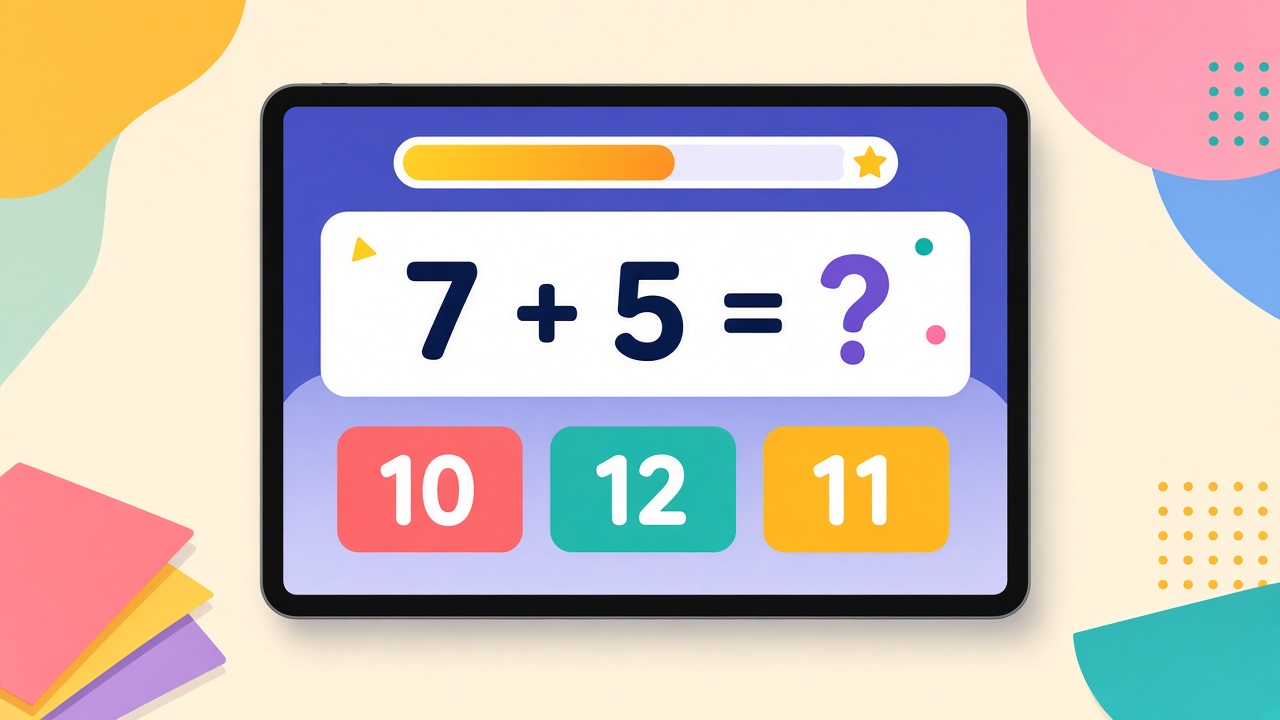
For years, Prodigy Math Game has occupied a unique space in the ed-tech landscape: an honest-to-goodness RPG that happens to teach math. Millions of kids across North America log in every week, create wizards and warriors, explore a sprawling fantasy world, and—almost without noticing—practice hundreds of math problems along the way. But the market has shifted considerably since Prodigy first captured the attention of teachers and parents. New competitors have appeared, pricing models have evolved, and parents are rightly asking tougher questions about screen time, paywalls, and whether the learning actually sticks.
We have been tracking Prodigy since 2021. This is our most comprehensive review yet, updated for 2026 with fresh testing, pricing checks, and side-by-side comparisons with the strongest alternatives. If you are trying to decide whether Prodigy deserves a spot on your child’s tablet, read on.
Is Prodigy made by Khan Academy?
No. Prodigy Math is made by Prodigy Education, not by Khan Academy. Prodigy Education’s about page describes its own game-based learning company, started in 2011. Khan Academy is a separate nonprofit, which is why the names get confused in search.
What changed (Oct 2026)
We rechecked Prodigy’s membership, paywall, and ownership on October 16, 2026, using the parent pricing page, the math membership selector, and the about page.
- This update answers whether Khan Academy made Prodigy and folds the membership-worth-it question into this review.
- US web prices on prodigygame.com, checked October 16, 2026: Core $9.95/mo or $58.95/yr, Plus $14.95/mo or $88.95/yr, Ultra $19.95/mo or $118.95/yr. Math and English content are free without a membership.
- The plan names on those pages are Core, Plus, and Ultra. An older Ultimate Member label is not the current list.
- A tutoring tier is not on those pages, so it is not listed. A specific free-play minute cap is also not published there, so this review does not state one.
What Is Prodigy Math Game?
Prodigy Math Game is a free-to-play, curriculum-aligned math platform built around an RPG (role-playing game) framework. Developed by Prodigy Education, a Canadian company based in Ontario, the game targets students in grades 1 through 8—roughly ages 6 to 14. It is available on the web, iOS, and Android, and it works on Chromebooks, which has made it a favorite in school settings where every student has a district-issued device.
At its core, Prodigy is a fantasy adventure. Players create a customizable wizard character, choose a starter pet, and set out into the game world of Prodigy Island. The island is divided into themed zones—forests, volcanoes, ice caverns, ancient ruins—each with its own storyline, NPCs (non-player characters), and boss battles. Progression through these zones is gated by math. Every time a player encounters a monster or engages in a PvP-style arena duel, they must answer a math question to cast a spell. Get the answer right, and your spell lands. Get it wrong, and you take damage. It is a simple loop, but it works: the math is the combat system.
Prodigy’s membership FAQ says the game includes more than 45,000 math questions for grades 1 to 8, aligned to state or provincial standards. A Prodigy explainer has also said more than 50,000 questions. We are not repeating an older “1,500 skills” count, because it is not on the pages we checked. Coverage includes major North American curriculum standards, including Common Core, TEKS (Texas), and several Canadian provincial curricula. Topics range from basic counting and number recognition at the first-grade level to proportional reasoning, integer operations, and introductory geometry by eighth grade. An adaptive algorithm adjusts question difficulty in real time based on the student’s accuracy and response speed, so two children in the same classroom may see very different problems even though they are playing the same game.
How the Gameplay Loop Works
Understanding Prodigy’s appeal means understanding why kids keep coming back. The gameplay loop is carefully designed to mirror the motivational structures of mainstream RPGs, and it is worth walking through in detail.
Character Creation and Customization
When a new player signs up, they build an avatar—selecting hair, skin tone, outfit, and a wizard name. Customization options expand as players level up or (more on this later) purchase premium items. Kids care about how their character looks, and Prodigy leans heavily into this. Limited-time outfits, seasonal gear, and rare cosmetic drops create a sense of exclusivity that keeps players engaged.
The Battle System
Battles are turn-based. When your character encounters an enemy, the screen shifts to a battle arena. You see your character on one side and the opponent on the other, each with a health bar. On your turn, you choose a spell element (fire, water, earth, storm, or ice), and a math problem appears. The difficulty of the problem is calibrated by the adaptive engine. Answer correctly, and your spell hits the enemy for damage scaled to your character’s level and equipment. Answer incorrectly, and the spell fizzles—your turn is wasted, and the enemy attacks.
This system is what separates Prodigy from flashcard apps. There is genuine tension in the battle. Kids want to get the answer right not because a parent is watching but because they do not want their character to lose. The emotional stakes of the game create intrinsic motivation, which is the holy grail of educational game design.
Pets, Loot, and Progression
Defeated monsters sometimes drop items—equipment, gold coins, or pet eggs. Pets can be hatched, leveled up, and used as companions in battle, each with unique elemental abilities. Prodigy’s current math page says players can rescue over 100 unique pets, and rare ones become genuine social currency among players. Equipment boosts your character’s stats, and gold lets you buy items from in-game shops.
The leveling system is classic RPG fare. Each battle earns experience points. Accumulate enough, and you level up, unlocking new zones, harder enemies, and better gear. The pacing is tuned so that a child practicing 20–30 minutes a day will see meaningful progress each session—a new level, a new area, or a new pet—without burning through content too quickly.
Quests and Storylines
Prodigy’s world includes a main quest line with a narrative arc: a dark wizard threatening the island, elemental crystals to recover, allies to recruit. Side quests branch off from NPCs in each zone. The writing is simple and age-appropriate, but it gives kids a reason to explore rather than just grinding battles in one spot. Seasonal events—a Halloween dungeon, a winter holiday festival, a back-to-school tournament—rotate in regularly and keep the world feeling alive.
Educational Value: Does the Math Actually Stick?
This is the question that matters most, and the answer is nuanced.
Curriculum Alignment
Prodigy’s math content is genuinely aligned with grade-level standards. Teachers can assign specific skill areas—say, fraction multiplication or area and perimeter—and the adaptive engine will prioritize those topics during gameplay. This teacher integration is one of Prodigy’s strongest selling points. Prodigy’s parent pricing page says the platform is trusted by more than 3 million teachers, and its teacher page says more than 800,000 teachers use Prodigy each year at no cost. Many assign Prodigy as supplementary homework.
We tested the alignment by mapping questions our tester encountered in a grade-4 playthrough against Common Core standards for that level. The coverage was solid: multi-digit multiplication, basic fractions, place value, measurement conversions, and simple geometry all appeared naturally during gameplay. The wording of questions generally matched what you would see on a standardized assessment, which is important for transfer of learning.
Adaptive Difficulty
The adaptive engine is one of Prodigy’s technical achievements. It uses a placement-test-style calibration when a student first starts and then adjusts continuously. If a child answers several fraction problems correctly in a row, the engine bumps up the complexity—from identifying simple fractions to comparing fractions with unlike denominators, for example. If the child struggles, it steps back and offers scaffolded problems.
In practice, this means that Prodigy can serve a wide range of learners within a single classroom. A gifted student and a student with math anxiety can play side by side, each facing problems at their zone of proximal development. The system is not perfect—it occasionally oscillates between too-easy and too-hard before settling—but it is among the better adaptive engines we have seen in a consumer product.
Limitations of the RPG Format
Here is the honest part. The RPG format is brilliant for motivation, but it imposes constraints on the depth of instruction. Prodigy teaches through repetition and pattern recognition, not through conceptual explanation. When a child encounters a new type of problem—say, long division for the first time—they see the problem, attempt it, and get immediate feedback (correct or incorrect). What they do not get is a lesson explaining why long division works, a visual model of partitioning, or a step-by-step walkthrough.
This means Prodigy is best understood as a practice tool, not a primary instructional tool. It reinforces skills that have already been introduced by a teacher or parent. A child who has never seen long division will struggle in Prodigy because the game expects you to attempt the problem, not learn the concept from scratch. Prodigy Education has added some tutorial pop-ups and hints in recent updates, but these remain thin compared to dedicated instructional platforms.
What the Research Says
Prodigy Education publishes its own research summaries and says results vary. We did not re-verify an independent 2024 University of Western Ontario paper in this update, so that citation is removed. The broader point still holds: gamified practice can raise time-on-task, and time-on-task is not the same thing as a large score gain.
The takeaway: Prodigy works best when it supplements quality instruction. It should not be the only math tool in your toolkit, but it can be a powerful motivator for kids who would otherwise resist practice.
Grade Levels and Age Appropriateness
Prodigy officially covers grades 1 through 8, but the sweet spot is grades 2 through 6 (roughly ages 7 to 12). Here is how the experience breaks down by age:
Grades 1–2 (Ages 6–8): Younger children can play, but they may need help reading problem text and navigating the world map. The math at this level—basic addition, subtraction, counting, and number comparison—is well-suited, but the RPG mechanics can be confusing for kids who have never played a video game before. Parents should expect to sit with their child for the first few sessions.
Grades 3–5 (Ages 8–11): This is Prodigy’s core audience. The math content is rich and well-paced—multiplication, division, fractions, decimals, basic geometry, and measurement. Kids in this range are old enough to navigate the game independently and young enough to find the fantasy world genuinely exciting. Engagement tends to be highest here.
Grades 6–8 (Ages 11–14): The math content extends into ratios, proportions, integers, basic algebra, and geometry, which is appropriate. However, the game’s visual style and tone are designed for a younger audience, and some middle-schoolers find it childish. If your 7th-grader still loves Pokémon-style collecting and does not mind the aesthetic, Prodigy can work. But many kids this age have outgrown it.
Pricing: Free vs. Premium in 2026
Prodigy operates on a freemium model, and this is where the conversation gets complicated. The prices below are US web prices on prodigygame.com, checked October 16, 2026, and they match the math membership selector. Prodigy also says memberships bought in the iOS app follow Apple’s subscription rules. We did not confirm a separate App Store price.
What You Get for Free
Prodigy’s math product page says the educational content is free: the questions, in-game videos, and math manipulatives. Anyone can make an account and start. Teacher tools listed there as free include reports, Focus Mode, assessments, and the placement test. Prodigy’s “What is Prodigy Math?” article says a Basic account includes Prodigy Math and Prodigy English, including the curriculum-aligned questions in each game, plus free parent and teacher tools, and that memberships are optional subscriptions with no extra in-game purchases or advertisements.
That same article says a free parent account includes a monthly report card and a curriculum progress report. Goals, practice sheets, cheers, and the fuller report set are described as membership features on the pricing and membership pages, so this review no longer treats goal-setting as part of the free dashboard.
What Premium Unlocks
Prodigy lists three memberships. Each price is for one child.
| Plan | Monthly | Annual, billed once | What it adds |
|---|---|---|---|
| Core | $9.95 | $58.95 (about $4.91/mo) | Math, member gear, parent goals |
| Plus | $14.95 | $88.95 (about $7.41/mo) | + Science |
| Ultra | $19.95 | $118.95 (about $9.91/mo) | + English (2 games, 3 subjects) |
US web prices on prodigygame.com, checked October 16, 2026. Math and English content are free without a membership.
Prodigy’s Math and English content are free, while Science content and additional game enhancements are available with a membership. The membership page says every member unlocks Math Facts and Arcadia (“10+ games and exclusive titles”). Plus and Ultra add a seasonal Member Chest. Core goals use a smaller reward list; Plus is described as a choice of over 40 in-game rewards. We did not find a live one-on-one tutoring plan on these pages, so that offer is not listed.
Is Prodigy membership worth it?
It is worth paying when a child in grades 2 through 6 will practice because the battles make them want another question, and when you will use the member goals and reports. Core is $9.95 a month or $58.95 a year (about $4.91 a month). Plus is $14.95 a month or $88.95 a year and adds science. Ultra is $19.95 a month or $118.95 a year and adds English. Those are US web prices on prodigygame.com, checked October 16, 2026.
Skip the membership if the free game is enough. Prodigy says the curriculum-aligned math questions are included without one. Pay if locked gear, an extra subject, or the fuller parent tools are the reason your child will keep practicing. A membership does not fix a session that is mostly pets and the map.
Use the free game for two weeks first. If accuracy on a skill you care about is moving and your child asks to play, Core at $9.95 a month or $58.95 a year is the math plan. Plus ($14.95/$88.95) and Ultra ($19.95/$118.95) are the steps up for science or English (US web prices, Oct 16, 2026). If interest is lukewarm, stay free and look at the alternatives below.
The Paywall Problem
The math itself is not the paywall. Prodigy’s product FAQ and a January 2026 Prodigy article both say free and paid students practice the same curriculum-aligned questions. Membership is the game layer and the extra parent tools: member-locked gear, Magicoin, Mythical Epics, Math Facts and Arcadia, more pets and mounts, and, on Plus and Ultra, science and English.
Prodigy’s explainer says a Core membership includes full access to all in-game areas and quests, which means some areas or quests are not part of the free game. The membership comparison also lists more battle choices in rifts for members. A January 2026 Prodigy article says a membership removes daily play caps, and the same article says the free game can be played indefinitely. Neither that article nor the pricing pages we checked publish a minute limit or a daily battle count. This review no longer states a 15–20 minute free-play cap.
Locked cosmetics are still the friction parents should plan for. If your child is sensitive to items they cannot use, decide before the first session whether you will stay on the free game or pay for a membership, and say so out loud.
The Parent Dashboard
The parent dashboard is one of Prodigy’s genuinely useful features.
After creating a free parent account and linking it to your child’s player profile, Prodigy says you can see recent activity and a curriculum progress view. On the pages checked in October 2026, the free account includes:
- Monthly report card: A skill-by-skill progress email, described on Prodigy’s “What is Prodigy Math?” page as part of the free parent account.
- Curriculum progress: A view of which grade-level skills your child is working through.
- Recent activity: The math product page says the parent dashboard shows recent play and any teacher assessments.
These extras are listed as membership features, not as part of the free account:
- Goals and rewards: Core can set question goals with a smaller reward list. Plus is described as a choice of over 40 rewards.
- Practice sheets and cheers: Printed practice sheets and in-game cheers are listed with memberships.
- Deeper insights: Plus adds a frustration view inside Practice Areas. We are not describing a free alert that splits play time between math and exploration, because the current pages do not spell that out.
For homeschooling parents, the curriculum progress view can help spot skills that still need work. For parents supplementing school, use that report for what it actually shows: which skills were practiced. It is not a verified log of how much time went to math versus wandering the map.
How Prodigy Compares to Alternatives
The gamified math space has gotten crowded. Here is how Prodigy stacks up against the strongest competitors in 2026. Prodigy prices in these tables are US web prices, October 16, 2026: Core $9.95/mo or $58.95/yr, Plus $14.95/mo or $88.95/yr, Ultra $19.95/mo or $118.95/yr.
Prodigy vs. Khan Academy Kids
Khan Academy Kids is Khan Academy’s early-years app for children ages 2 through 8. It covers math, reading, social-emotional learning, and creative expression. It is free, with no ads and no subscriptions (US App Store, Oct 2026).
| Feature | Prodigy Math | Khan Academy Kids |
|---|---|---|
| Price | Core $9.95/mo or $58.95/yr; Plus $14.95/$88.95; Ultra $19.95/$118.95 (US web, Oct 2026) | Free, no ads, no subscriptions (US App Store, Oct 2026) |
| Age range | Grades 1–8 (ages 6–14) | Ages 2–8 |
| Subjects | Math free; science on Plus; English on Ultra | Math, reading, SEL, creative arts |
| Game format | RPG with battle mechanics | Mini-games, stories, activities |
| Adaptive | Yes, strong | Yes, moderate |
| Offline mode | No | Yes |
| Parent dashboard | Detailed | Basic |
| Ad-free | Yes. Prodigy says the games do not add advertisements or extra in-game purchases | Yes |
Who should choose Khan Academy Kids: Families with children under 8 who want a free, no-ad, no-subscription app covering several subjects. The math depth thins out past a second-grade level.
Who should choose Prodigy: Families with children in grades 3–6 who need focused math practice and respond well to RPG-style motivation. Prodigy’s math content is significantly deeper and broader than Khan Academy Kids for this age range.
Prodigy vs. DragonBox (Kahoot! Kids)
DragonBox is now sold as Kahoot! apps by DragonBox. The puzzle apps still focus on conceptual understanding rather than procedural fluency, using visual metaphors such as balancing scales for equations and tangram-like shapes for geometry.
| Feature | Prodigy Math | DragonBox |
|---|---|---|
| Price | Core $9.95/mo or $58.95/yr; Plus and Ultra above (US web, Oct 2026) | Free download; Kahoot! Kids $5.99/mo or $35.99/yr, or $19.99 one-time per app (US App Store, Oct 2026) |
| Age range | Grades 1–8 | Ages 5–12 (varies by app) |
| Approach | Procedural practice via RPG | Conceptual understanding via puzzles |
| Breadth | Grades 1–8 math; Prodigy cites 45,000+ questions | Narrow focus per app |
| Engagement model | Long-term RPG progression | Short-term puzzle completion |
| Teacher integration | Strong | Minimal |
| Progress tracking | Detailed parent dashboard | Basic per-app tracking |
Who should choose DragonBox: Families who want their child to deeply understand why math works, not just how to execute procedures. DragonBox Algebra, in particular, is exceptional—it teaches algebraic thinking to children as young as five through pure visual manipulation, no numbers required. The US App Store lists a free download, then Kahoot! Kids at $5.99 a month or $35.99 a year, or $19.99 one-time per app (Oct 2026).
Who should choose Prodigy: Families who need ongoing daily practice across a broad curriculum. DragonBox apps are brilliant but finite—a child will complete each one in a few weeks. Prodigy is designed for sustained, year-round engagement.
Prodigy vs. IXL
IXL is a comprehensive practice platform covering math, English, science, and social studies from pre-K through 12th grade. It is not gamified in the RPG sense—there is no fantasy world or character progression—but it does use achievement badges, streaks, and a diagnostic system to motivate students.
| Feature | Prodigy Math | IXL |
|---|---|---|
| Price | Core $9.95/mo or $58.95/yr; Plus and Ultra above (US web, Oct 2026) | $9.95/mo one subject, $19.95/mo all four core; $79–$159/yr (ixl.com, Oct 2026) |
| Age range | Grades 1–8 | Pre-K–12 |
| Subjects | Math free; science on Plus; English on Ultra | Math, ELA, science, social studies |
| Engagement | RPG gameplay | Achievement badges, streaks |
| Diagnostic | Adaptive placement | Real-time diagnostic with skill plan |
| Explanation quality | Minimal | Step-by-step solutions |
Who should choose IXL: Families who prioritize comprehensive academic coverage and detailed explanations over gamification. IXL’s diagnostic tool is genuinely powerful—it identifies exactly what a student knows and does not know and generates a personalized skill plan. Older students (grades 7+) are generally better served by IXL, as Prodigy’s RPG wrapper loses appeal for teens.
Who should choose Prodigy: Younger children (grades 2–6) who resist traditional practice. If your child will not voluntarily sit down with IXL but will eagerly boot up Prodigy to battle monsters, the engagement advantage outweighs IXL’s instructional depth.
Prodigy vs. DreamBox
DreamBox is the adaptive K–8 math lesson in this set, not another RPG. Prodigy membership is $9.95. DreamBox’s one-month individual price is $12.95, and the family one-month price is $19.95. DreamBox also sells 6-month, 12-month, and lifetime terms, and it does not run on phones or Android tablets.
Choose Prodigy when the child will practice only if the session looks like a game. Choose DreamBox when you want the software to carry more of the teaching and you have a computer, Chromebook, or iPad.
When a game world fits better than math battles
Prodigy is math practice inside an RPG. A child who wants to build, code, or join a classroom world is shopping for a different product. Our Minecraft Education vs regular Minecraft comparison covers the price gap, who can buy Education, and Code Builder.
What other parents and reviewers say
Checked October 16, 2026. These are other sites’ snapshots, with links. This page does not mark them up as our rating.
- Apple App Store: Prodigy Math Game showed 4.8 out of 5 from 250K ratings. The developer on the listing is Prodigy Education Inc.
- Google Play: Prodigy Math: Kids Game showed 4.7 stars, and the developer is Prodigy Education Inc. The same page showed 68.7K reviews in the header and 43.4K reviews in the ratings block, so those counts are not one number. The listing’s update date read December 3, 2025.
- Common Sense Media: Prodigy: Kids Math Game, last updated December 18, 2025, lists it for age 7+. The review describes a fantasy game for practicing math that has already been taught, and says premium prompts can pull attention off the questions. That page showed 497 parent reviews and 649 kid reviews. We are not converting that write-up into a star score.
Pros and Cons
What Prodigy Gets Right
- Engagement is genuinely strong. The RPG format works. Kids ask to play Prodigy, which is not something you can say about most math worksheets. The battle system creates intrinsic motivation that sustains daily practice across weeks and months.
- Curriculum alignment is solid. The math content maps well to Common Core and other North American standards. Teachers can target specific skills, and the adaptive engine keeps problems at an appropriate difficulty level.
- The parent tools are useful, and the deeper ones are paid. A free parent account includes a monthly report card and curriculum progress. Goals, practice sheets, and the fuller reports come with a membership.
- Accessibility. Prodigy runs on nearly everything—web browsers, iPads, Android tablets, Chromebooks—and the free tier provides access to all educational content. The barrier to entry is low.
- Teacher integration. For families whose schools use Prodigy, the game can sync with classroom assignments and teacher-set focus areas, creating continuity between school and home practice.
- Regular content updates. Seasonal events, new zones, pet releases, and storyline expansions keep the game feeling fresh. Prodigy’s content team has been consistent about adding new material.
Where Prodigy Falls Short
- Member-locked extras are the real friction. The math questions are free. Gear, Magicoin, Mythical Epics, some areas or quests, and the extra parent tools are not. We could not confirm a published daily battle or minute cap on the October 2026 pricing pages.
- Practice, not instruction. Prodigy does not teach new concepts well. It assumes prior instruction and focuses on repetition. Children encountering unfamiliar problem types will flounder without external support.
- Engagement can become distraction. Some children spend more time managing pets, exploring zones, and shopping for gear than actually answering math problems. Watch sessions yourself. The current parent pages do not spell out a free report that splits math time from exploration time.
- Middle-school aging out. The game’s aesthetic and tone are designed for elementary-age children. Many students in grades 7–8 find it embarrassing or boring, limiting its effective range to younger than the official grade-8 ceiling.
- No offline mode. Prodigy requires an internet connection. For families in areas with unreliable connectivity, or for car trips and airplane flights, this is a real limitation.
- Extra subjects cost more. The free educational content Prodigy advertises for this game is math. Science is a Plus or Ultra feature, and English is Ultra. A single free login does not cover every subject.
Tips for Getting the Most Out of Prodigy
Based on our testing and conversations with parents who have used Prodigy for multiple years, here are practical suggestions:
Set time expectations upfront. Decide before your child starts playing whether you will be using the free tier or paying for premium. If staying free, explain the limitations matter-of-factly: “Some items in the game cost money, and we’re not going to buy those. The math part is the same either way.” Framing this early prevents mid-session meltdowns.
Use the parent tools weekly. Check in every Sunday evening for five minutes. On a free account, look at the monthly report card and curriculum progress. If you have a membership, use goals and practice areas. If play is mostly exploration, set a practice expectation out loud.
Pair Prodigy with instruction. When the dashboard shows your child struggling with a skill area, do not rely on Prodigy to teach it. Pull out manipulatives, watch a Khan Academy video, or work through a few problems together at the kitchen table. Then send them back into Prodigy to practice.
Leverage teacher integration if available. If your child’s teacher uses Prodigy, ask them to set focus areas aligned with current classroom instruction. This turns Prodigy homework into targeted practice rather than random skill sampling.
Take breaks. Prodigy is designed for long-term engagement, but burnout happens. If your child’s enthusiasm wanes after a few months, take a break and come back to it. The account and progress will still be there.
Privacy and Safety
Prodigy says it is COPPA- and FERPA-compliant and that it works with iKeepSafe on privacy review. It also says players cannot send free-typed chat: messages come from a pre-approved list. We did not re-check a separate school “Student Data Privacy Agreement” in this update, so that specific contract name is not claimed here. Read Prodigy’s current privacy policy before you create an account.
Parents should be aware that Prodigy does use engagement techniques—notifications, streaks, limited-time events—that are designed to encourage daily play. These are effective but worth monitoring if you are concerned about screen time habits.
Prodigy Math review: our verdict
Prodigy Math Game earns a 4.3 out of 5 in 2026. It remains one of the most effective tools for motivating reluctant math practitioners, and its curriculum alignment and parent dashboard are genuinely best-in-class for the gamified learning category. The RPG format is not a gimmick—it creates real, sustained engagement that translates into meaningful practice volume.
But Prodigy is not without trade-offs. The math curriculum is free. The paid tiers add cosmetics, currency, extra subjects, and parent tools, and we are not claiming that gap is wider than it was two years ago. The platform teaches through repetition, not explanation, which means it works best as a supplement to quality instruction rather than a standalone learning solution. And its effective age range is narrower than advertised—it truly shines in grades 2 through 6 and loses much of its appeal on either side of that window.
Best for: Children in grades 2–6 who love video games and resist traditional math practice. Families willing to invest in premium for the full experience. Homeschooling parents who want a detailed, curriculum-aligned progress dashboard. Classrooms where teachers actively use the platform’s assignment features.
Consider alternatives if: Your child is under 7 (try Khan Academy Kids), you want deep conceptual instruction (try DragonBox), you need multi-subject coverage (try IXL), your child is in middle school and finds the aesthetic childish, or you are unwilling to pay and your child is frustrated by premium prompts.
Final Recommendation
Start with the free tier. Give it two weeks—enough time for your child to get past the tutorial and into regular battles, and to encounter the adaptive engine’s calibration in earnest. Watch the parent reports for what they actually show: which skills were practiced, and whether accuracy is moving. Sit nearby often enough to see whether play is mostly math or mostly the map.
If the answers are positive and your child is asking to play daily, Prodigy has done its job. Core is $9.95 a month or $58.95 a year. Plus is $14.95/$88.95 if you want science, and Ultra is $19.95/$118.95 if you want English too (US web prices, Oct 16, 2026). If engagement is lukewarm, save your money and explore the alternatives listed above.
Prodigy Math Game is not perfect, but it solves a real problem: it makes math practice feel like play. For the right child at the right age, that is worth quite a lot.
Frequently Asked Questions
Is Prodigy made by Khan Academy?
No. Prodigy Math is made by Prodigy Education, not by Khan Academy. Prodigy Education's about page describes its own game-based learning company, started in 2011. Khan Academy is a separate nonprofit, which is why the names get confused in search.
Is Prodigy membership worth it?
It is worth it when a child in grades 2 through 6 will practice because of the game and you want the member parent tools. Core is $9.95/mo or $58.95/yr, Plus is $14.95/mo or $88.95/yr, and Ultra is $19.95/mo or $118.95/yr (US web prices, Oct 16, 2026). If your child mostly explores the map, stay on the free game. Prodigy's Math and English content are free, while Science content and additional game enhancements are available with a membership.
How much does Prodigy cost?
Prodigy's math is free. Membership is $9.95/mo or $58.95/yr for Core, $14.95/$88.95 for Plus, and $19.95/$118.95 for Ultra (US web prices, Oct 16, 2026).
What Parents Are Saying
Real experiences from parents who've used this tool with their children
Loading parent reviews...
No reviews yet
Be the first parent to share your experience with this educational tool!
Get Our Monthly Picks
Discover the best new educational tools for your kids. No spam, unsubscribe anytime.
Related Reviews
Browse All Reviews
Discover more educational tools