A KidEdTools review is one star rating out of 5, written by the editorial team after a hands-on pass when we can make one. This page is the method behind that number: what we test, what we only quote, and how a reader can correct us.
Updated October 18, 2026
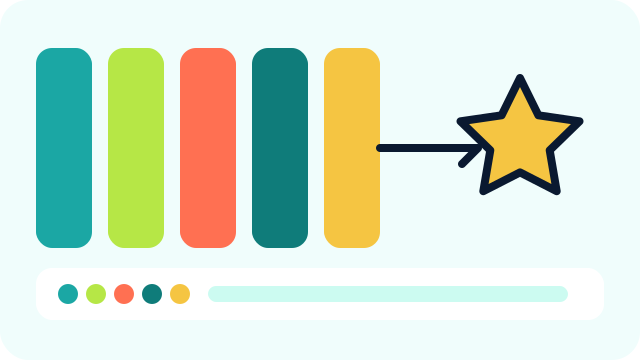
The review desk: five checks on one clipboard, and one star for the published rating.
Who reviews
Reviews are written by the KidEdTools editorial team. Andreina Castillo leads that team. She is the editorial author of the site.
A byline on a review means the team stands behind the test notes and the star. The method on this page is the one the team uses for KidEdTools reviews.
AC
Andreina Castillo
Editorial author
She leads the editorial team that writes and updates the reviews. A fuller introduction is on the about page.
Scoring criteria and the weight they carry
The reviews this page is drawn from are Scratch, Khan Academy Kids, DreamBox, Epic, Khanmigo, Prodigy, and Marble. Each one publishes a single rating out of 5. None of them publishes five sub-scores. The checks below are the ones those reviews actually use. Pick a check to read how it moves the star.
Five checks, one published star. The bars are the same height because the site does not split the rating into points.
Learning value
Weight: Starts the verdict
Does a child learn the thing the product claims to teach?
We look at the lesson, the practice, or the project, not at a badge count. Scratch is rated as a place to learn programming logic. DreamBox is rated for lessons that change while a child is working. Khanmigo is rated by whether the next problem can be solved without the chat handing over the answer. Prodigy's review keeps time in the game separate from whether the math sticks.
Engagement
Weight: Raises or pulls down
Will a child come back, and is that time on the learning?
Engagement raises a rating when it brings a child back to the work. It lowers a rating when the game pulls the child off the work. Khan Academy Kids is described through the rewards it actually uses. Epic can raise the number of books a child finishes, and it can also become browsing. Prodigy's battles are a reason to practice. The same review names pets and gear as time that is not math. Marble's note calls the short, single-idea visit curiosity and respect for attention. Those are that review's words for this check.
Ease of use
Weight: Shapes who it is for
Can a child start, and can a parent follow?
We note the first screen, the devices that run it, and whether a narrow window still works. Scratch can start with no account. DreamBox's review puts the device limit in the verdict: no Android, no phone. The rating stays 4.6 because the lesson is what the star is for, and the limit is stated rather than smoothed over. The Marble Water Lab still ran at a phone width, with the long notes hidden. Ease of use changes who should buy it. It is not a separate score.
Safety and privacy
Weight: Can hold the star
Are ads, accounts, and data claims stated in a way a parent can check?
We read the public signals listed below. A vendor sentence stays a vendor sentence. It is not a certification from us. On Marble, the app was not installed. The scoring note says the device limits, and the difference between the company's privacy claims and the App Store label, hold the rating at a provisional 4.0. This check is part of that hold. It is not a separate point score.
Price and value
Weight: Sits in the verdict
What does a family actually pay, and what does that money buy?
The price is the public price on the day we checked, with the page named. Free is part of the value, and so is what the free tier leaves out. Epic, DreamBox, Khanmigo, and Prodigy each put a dated price next to who should pay. Marble's note says access and cost: free in beta, and no published price after that. An unpublished price stays unpublished. We do not guess it into the star.
Weight in the published star
Learning valueStarts the verdict
EngagementRaises or pulls down
Ease of useShapes who it is for
Safety and privacyCan hold the star
Price and valueSits in the verdict
One rating out of 5. The bars are the same length on purpose. KidEdTools does not assign a point weight, and it does not turn another site's grid into our star.
A hands-on note is something we did. We say what we opened, the date, and the screen or device. A week with a reading app, a beginner session in Scratch, and a browser lab we could load without an account all count. A feature list we only read does not.
Length follows the product. Epic's review is a three-month read with three children. The coding roundup tested apps for at least two weeks. Marble's review is one morning on three public web pages, because the app needs a current iPad we did not have. The review says so.
When something is not tested
The sentence credits the source. A claim we could not run is attributed to the vendor or the App Store, not to a KidEdTools session. The Marble review does this for quests, voice, drawing, accounts, and the parent time limit.
If the product in the headline is not the product we used, the score is labeled provisional. Marble's at-a-glance line says "4.0 / 5, provisional. Web experiments only." The scoring note says the app is unscored and that the number can move after an app test. Provisional is a label, not a softer star.
Our test process
Open a step. The order is the order a review is built. Not every product gets every step in full: a missing device is written down, and the score is labeled if that gap is the product itself.
1Open the public page and write the date
We start from a page a reader can open: the vendor's current pricing or product page, and the store listing when there is an app. The date of that visit sits next to the figure. A later visit replaces the older figure. We do not keep a number we could not find again.
2Use the product when we can
Hands-on means we opened it. That can be a browser lab, an installed app, a kit on the table, or a parent account we could use. The review names what we opened and the device or window. Scratch was tested with beginners aged 8 to 16. Epic was used with three children, ages 6, 9, and 11, over three months. The Marble review opened the Water Lab, the Ecosystem Simulator, and the curriculum map in a browser on October 18, 2026. It did not install the app.
3Record price, devices, and ages from those pages
A free tier, a trial, and a paid plan are different products. If a page says one age band and the store says another, both lines stay, with the source on each. If the price after a beta is not on the page, the review says it is not published.
4Read the privacy signals
When they exist, we check the App Store privacy label, the vendor's COPPA statement, ads, and accounts. The privacy section on this page is the list. A claim we did not confirm is not upgraded into a KidEdTools finding.
5Mark anything we did not do
A feature we did not run is credited in the sentence to the vendor or the App Store. Quests, voice, and the parent time limit in the Marble review are written that way. Store averages are other people's ratings. We do not turn them into our star.
6Publish one rating out of 5
The five checks are what that number reads. There is no second score and no point split. If the product we are judging is not the thing we tested, the rating is labeled provisional, in the scoring note and in the at-a-glance line. Provisional means the number can move after a hands-on test. Marble is the current case: 4.0, provisional, for the web experiments only.
7Re-check when the product changes
A review shows an updated date when we open it again. DreamBox, Epic, Khanmigo, and Prodigy were updated on October 16, 2026. The Marble review says it will be opened again after the next release. A wrong figure can be reported from the contact form. The last section on this page is that path.
Kids' privacy
We do not certify a product. We read the public signals a parent can open, and we say when a signal is the company's own sentence. COPPA is the U.S. children's privacy rule. A vendor's "COPPA compliant" line is their statement until we have checked the page it comes from.
App Store privacy label
When the product is on the App Store, we read the privacy label and the date we fetched the listing. Apple sometimes marks a label as not verified by Apple. We keep that mark. On Marble, the label fetched October 18, 2026 listed email, name, audio, gameplay content, photos or videos, identifiers, usage data, and diagnostics as data linked to the user. That label is the store's listing, not a session we recorded.
The vendor's COPPA statement
We look for the company's own words in the privacy policy or the store description. Prodigy says it is COPPA- and FERPA-compliant. Marble's privacy policy and store description say the product is COPPA compliant. Both stay attributed to the company. The rule itself is 16 CFR Part 312.
Ads
We note whether the product shows ads, and whether a paid tier is what removes them. Scratch is described as free with no ads. Khan Academy Kids is described as free with no ads and no in-app purchases. A "no ads" line we did not see ourselves is credited to the vendor. Marble's no-ads line is the company's FAQ, and the review says we did not verify it inside the app.
Accounts
We check who can create an account, whether a child can start without one, and what a parent can see. Scratch can start without an account. Khanmigo's review says a parent can review chat history, which is Khan Academy's statement, and tells parents to use that tool. Marble's FAQ says only a parent can create an account. We did not open an account there, so that line stays theirs.
Sources and dates
A price, an age range, a download size, or a rating count carries two labels: the date we checked it, and the public page it came from. If we cannot open that page on a later pass, we drop the figure. The Prodigy update removed a university paper we did not re-verify. Khanmigo's pilot notes stay labeled as Khan Academy's own account, with a pointer to read the date on the post.
We do not use a document that exists only as a producer's private handout, an agent's pitch, or a broker's sheet. A vendor's public research page can be quoted. It stays the vendor's account. It is not an independent result, and it is not our star.
Independence
A vendor cannot buy a score. The about page says companies cannot pay for a positive review or influence our ratings.
The terms say KidEdTools may contain affiliate links, and that a commission does not change the editorial content. The about page and the newsletter page say the same thing about product links and discount codes. Some reviews repeat a short commission note at the top.
As of October 18, 2026, the review posts do not add affiliate tracking codes to their links. The Marble review says there is no affiliate link for that product. If a later link earns a commission, the page will say so. The score is still not for sale.
Updates and corrections
We re-check a review when the product changes: a new price, a new device limit, a privacy label that moved, or a release we said we would open. The updated date on the review is the date of that pass. The first published date stays.
If a figure is wrong, use the contact form and choose Report an Error. That is the correction path. You can also write to info@bluepen.ai. Name the review, the figure, and the page that shows the correction.